LIP-SYNC
Late sound is forgiven more
In tests behind ITU-R BT.1359, viewers on average noticed sound running about 45 ms early, but sound running late only at about 125 ms.
Check a situation wirelessmixer
Start
WIRELESS AUDIO, IN MILLISECONDS
Every wireless link takes a little time.
Radio, buffering and digital processing all add delay before sound reaches your ears. Broadcast standards and listening studies show how much of that delay people actually notice, and it depends on what you are doing.
MILLISECONDSadd up
Check a situationKeep in mind
THE SHORT ANSWER
It depends on what you are listening to.
Watching, playing and gaming each have their own limits.
LIP-SYNC
In tests behind ITU-R BT.1359, viewers on average noticed sound running about 45 ms early, but sound running late only at about 125 ms.
Check a situationPLAYING
In a 2024 study of 37 people, the average noticeable delay was 49 ms from a zero-delay start, and people with more musical training noticed smaller changes.
See the numbersDISTANCE
Sound is slow next to radio. Researchers note that each metre of air adds roughly three milliseconds, so a speaker across the room delays you too.
Add it upA QUICK DELAY CHECK
Pick a situation to see roughly how much delay research and standards suggest people tolerate. The bar shows how sensitive that situation is to delay.
Figures are averages from published tests and studies. Individual people, programmes and pieces of music vary.
TWO NUMBERS WORTH KNOWING
One figure from broadcast testing,
one from the physics of sound in air.
45 / 125 ms
Average detection, sound early vs late
Subjective tests show detectability thresholds of about +45 ms (sound early) to −125 ms (sound late), and acceptability thresholds of about +90 ms to −185 ms on average.
LIP-SYNC · ITU-R BT.1359
≈ 3 ms per metre
Delay added by each metre of air
NASA puts the speed of sound at about 1,100 feet a second at sea level, which is why each metre of travel adds roughly three milliseconds.
SOUND IN AIR · SCHMID ET AL. 2024
The EBU's R37 recommendation sets its limits at the point where loss of lip-sync becomes perceptible to 50% of observers, and asks for each stage of the chain to stay within 5 ms early and 15 ms late.
FOUR THINGS TO KEEP IN MIND
Wireless links, digital processing and plain distance all add their share. Broadcasters budget for each step; the same thinking helps at home or on a small stage.
Step 1
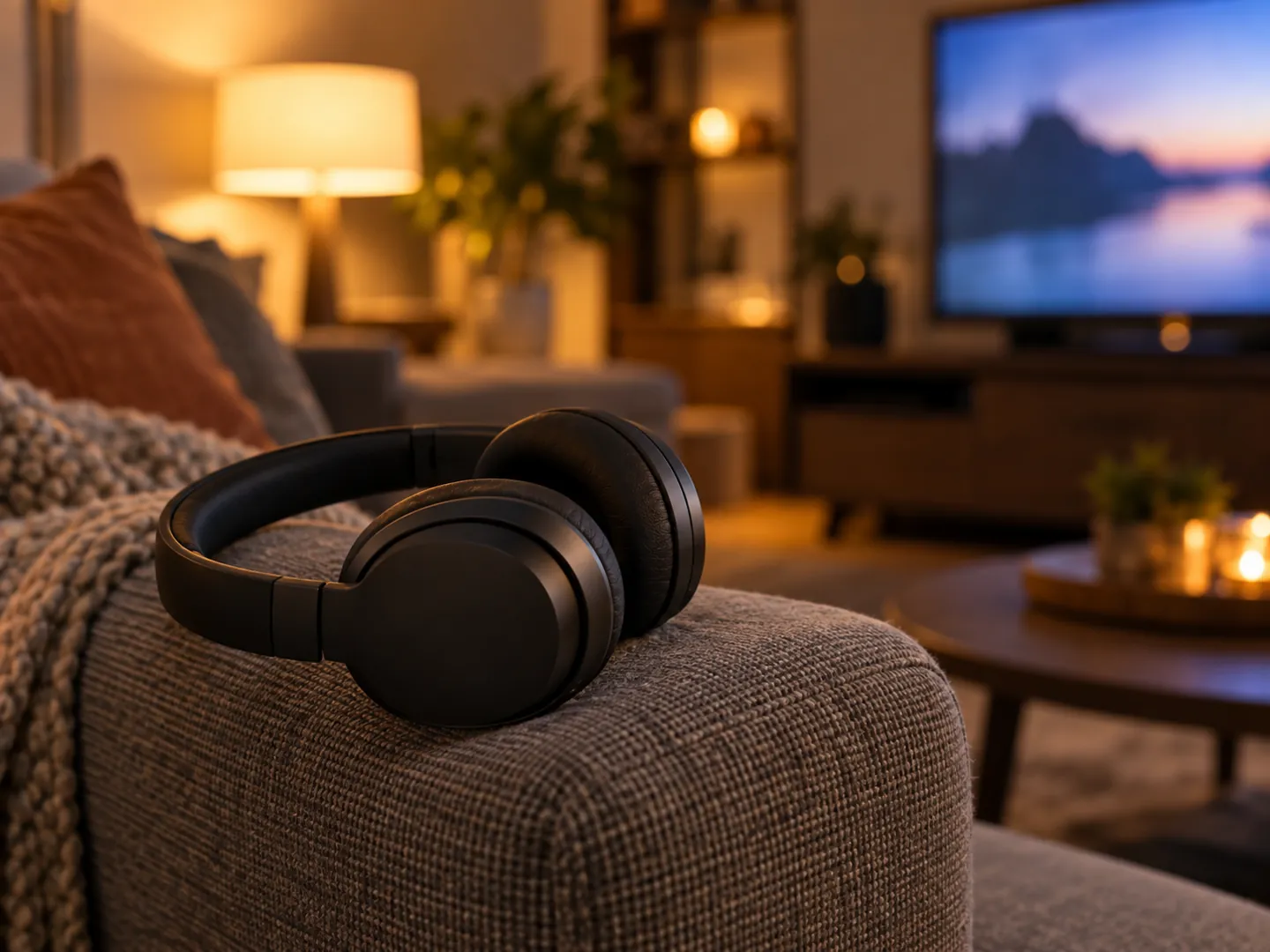
Broadcast guidance treats each codec, studio and transmitter as adding delay, and the EBU gives each stage only 5 ms early to 15 ms late.
Step 2
Each metre of air adds roughly 3 ms, so a monitor speaker several metres away adds as much as some digital links.
Step 3
Sound ahead of the picture is noticed at about 45 ms on average, far sooner than sound that lags behind.
Step 4
In one study pianists managed fast pieces with up to 50 ms of delay and slow pieces with up to 75 ms.
WHY STEADY MATTERS
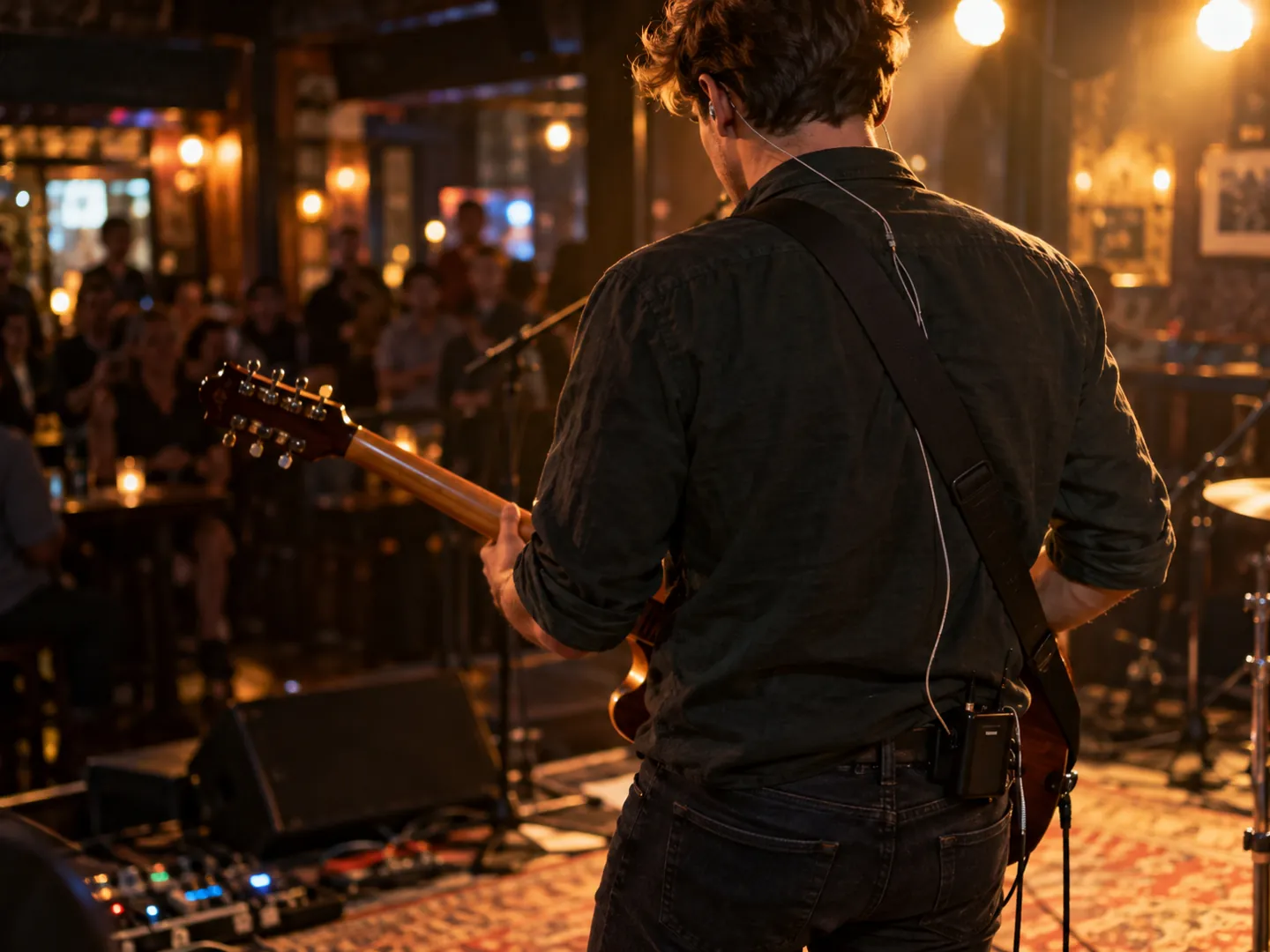
The 2024 Regensburg study measured how big a change in delay people could notice. Starting from no delay, the average was 49 ms; starting from 64 ms it fell to 27 ms; starting from 512 ms it rose to 77 ms.
Real playing is never perfectly in time anyway. Studies reviewed by the same team found asynchronies of up to 50 ms are common between musicians, and that latencies of up to 30 ms are common and acceptable with traditional instruments.
Questions
Every stage between camera and speaker can add delay, from studio equipment to codecs, transmitters and the receiver. ITU-R BT.1359 notes that the transmitter and receiver may introduce an additional, variable timing difference.
Tests summarised in ITU-R BT.1359 found average detection at about 45 ms when sound is early and about 125 ms when sound is late. Acceptability thresholds were about 90 ms early and 185 ms late.
The EBU's R37 recommends that, at any output intended for broadcast, sound is no more than 40 ms ahead of the picture and no more than 60 ms behind it.
It varies. Studies reviewed by Schmid and colleagues found 100 ms acceptable for playing with a piano but only 20 ms for accordion players, and clapping pairs began slowing down above about 30 ms.
Yes. Sound travels at about 1,100 feet a second at sea level, according to NASA, and researchers note that each metre it travels through air adds roughly three milliseconds.
Destination
Updated
ABOUT THIS NAME
wirelessmixer.com is part of the DoodleSale portfolio. It isn't in an auction right now, but you can ask about leasing it.